The meteoric rise of Afrobeats is an undeniable reality. This genre sits at a historic zenith, representing a fundamental shift in the international cultural equilibrium.
Today, the priority has shifted toward sustainability, ensuring creators, business leaders, and systems thrive over decades. Building this future requires a move toward institutional strength, where “hype” serves as a foundation for a permanent, structural monument.
To turn temporary visibility into a permanent global legacy, the industry must shift its focus from the “front of house” (the music) to the “back of house” (the infrastructure).
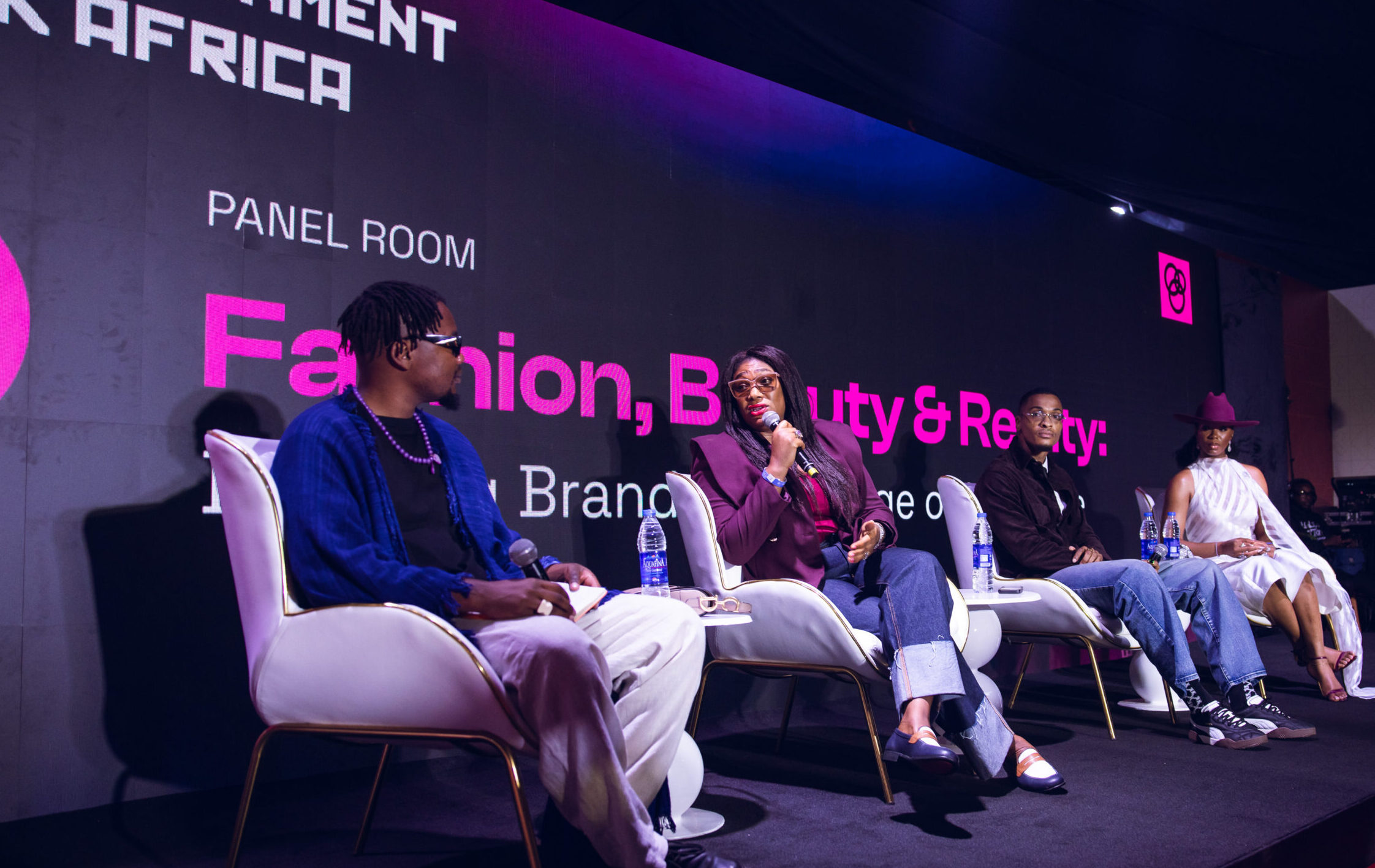
The distance between creative output and industrial support remains a primary focus for the continent’s leadership. Success depends on bridging the music with the framework that carries it. An Entertainment Week Africa panel on “Turning Global Hype into Lasting Impact”, featuring Oumou Fofana, Mandy Uzoagba, Sipho Dlamini, Mankaprr Conteh, and Tyrone Grandeur (Senior A&R, 1RPM), revealed a visible disparity between the quality of the music and the strength of the systems supporting it.
Grandeur observed:
“Afrobeats has proven its global status. However, a gap exists between the music and the structure. I believe closing this gap is one of the major factors that determines whether the ‘African conversation’ remains a passing moment or becomes a lasting legacy.”
Lasting impact requires an ecosystem where creators and business leaders are synchronized. This involves professionalizing the “inner circle,” from managers who grasp the intricacies of collective management organizations to lawyers who safeguard intellectual property. In an era of TikTok-driven singles, the industry must prioritize the deep storytelling that defines “Icon” status.
To thrive in a digital era defined by rapid consumption, the industry must return to the discipline of Artist and Repertoire (A&R). Icons are forged through unified narratives and bodies of work that define eras. Sipho Dlamini (President, Gamma Africa & Middle East) and Mankaprr Conteh (Staff Writer, Rolling Stone) both highlighted the decline of intentional A&R as a critical deficiency.
Singles provide the hype, yet albums provide the legacy. Landmark artists such as Kendrick Lamar and Rihanna were defined by comprehensive projects that anchored their careers. The A&R Responsibility: Dlamini warned that many labels have moved away from traditional A&R, opting instead to release whatever is delivered. To turn a local star into a global icon, there must be a rigorous process of refining the sound and crafting a narrative that resonates far beyond a 15-second clip.
Mankaprr Conteh reinforces that these career-defining statements are essential for landmark status:
“African artists who define themselves through a concise body of work, supported by intentional A&R, make a profound statement. I think of how Tems’ ‘For Broken Ears’ broke her out, or how Rema’s ‘HEIS’ changed the trajectory of his career.”
A major hurdle in the journey to global icon status is the current state of touring infrastructure on the continent. While many artists prioritize playing London or New York, Sipho Dlamini argued that the middle ground is vital.
Sustainable impact requires a Pan-African touring circuit.
The industry must look beyond the diaspora or Western markets to fund the growth of African music. Developing routes through Kenya, South Africa, Ghana, and beyond ensures that an artist has a “home base” that is financially and logistically viable before they embark on a world tour. Dlamini advocated for this strategic shift:
“The ambition should reach beyond shows in London or America. A wide disparity exists between being a local artist and an international touring artist. We must focus on developing a Pan-African touring circuit for our artists locally.”
Global stardom demands global-standard management. Lasting impact is often the result of boardroom strategy. This involves:
Forward Planning: Diligent management of royalties, collective management organizations, and licensing.
Legal Protection: Mandy Uzoagba emphasized that the transition from local to global requires sophisticated licensing and legal frameworks to ensure artists are compensated and protected.
The bridge to a global future is built on infrastructure, narrative, and local expansion. Professionalizing every facet of the business, from writing camps to royalty collection, ensures that the current golden age of African music becomes a permanent fixture in the global landscape.
The industry now holds the responsibility to transform this historic moment into an era of long-term prosperity.